
The beginnings of a
Mexican hacienda
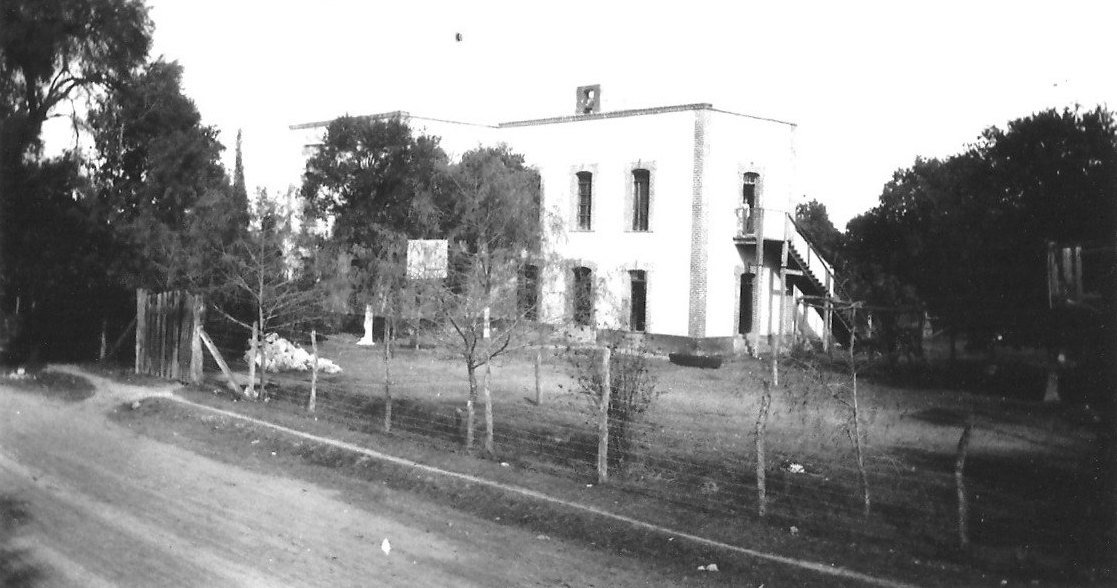
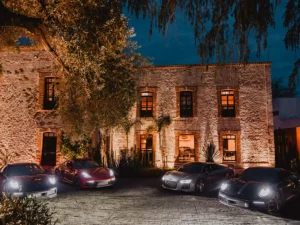
The history of Hacienda Casa Grande Rio dates back to the Mexican Revolution of 1910-1917. At that time, the municipality of Rioverde, San Luis Potosí, was considered rural, with an economy based mainly on agriculture, including crops such as corn, beans, and sorghum. Given the context, it was natural for this hacienda to be built, as historically it was a large tract of land for agriculture, livestock, and the production of specific products such as sugar, dairy, and henequen (green gold).
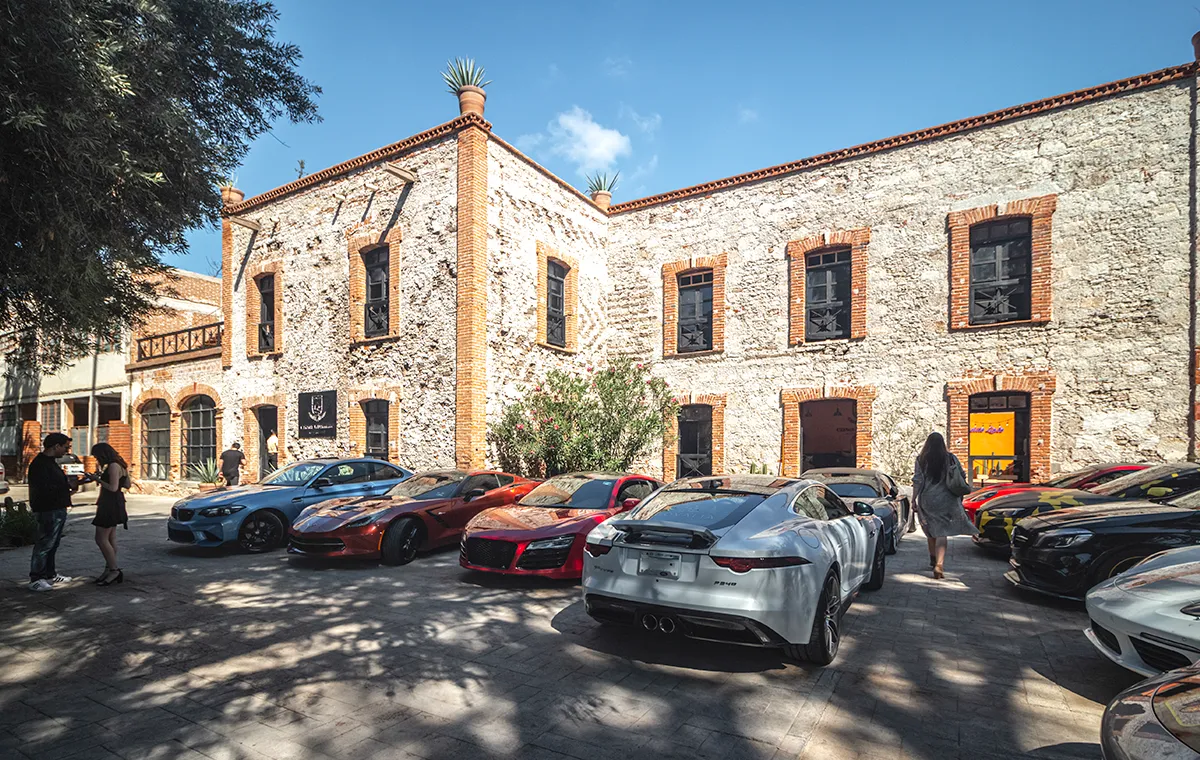
The exact date of construction is unknown, but it is believed to have been built in the late 1800s, as its construction system, consisting of thick adobe walls combined with stone, exposed brick in enclosures and openings, wooden planks in enclosures, Catalan vault-type slabs supported by wooden beams on clay tiles and lime plaster, indicate that it was built in the late 1800s and that its original surface area was clearly reduced as urbanization progressed.

A structure
BUILT TO LAST
The functional structure of this hacienda is characterized by its radial layout around the straight staircase in the central corridors of the property. The hacienda has undergone three renovations, the oldest of which was in 1927, followed by an extension in what is now the restaurant in 1977, and the latest, which began in 2010 and continues to this day.
During the first two interventions, colonial architectural styles were mixed, which can be seen in the type of openings. Its cornices and exposed brick openings stand out. As evangelical congregations became established after the revolution, there was a need for a large number of workers with formal education, in accordance with the educational standards of the new era. Therefore, in 1927, an incorporated preparatory school was reopened in Río Verde to provide the necessary literary instruction.
From Hacienda to
Preparatory School
The school closed in 1934, having set several young people on track to occupy positions of distinction in their professional lives.
The school was founded by J.G. Dale in 1901 on Centenario Avenue in this city, reaching a student body of 100 when it was interrupted by the revolution and the building was destroyed. In 1977, Mr. and Mrs. Halliday, who came from Tacoma, Washington, USA, reopened the incorporated high school (Casa Grande Rio), starting with seven students in the first year of high school and increasing the number to 30 students by 1981.
A Project That
Left Its Mark
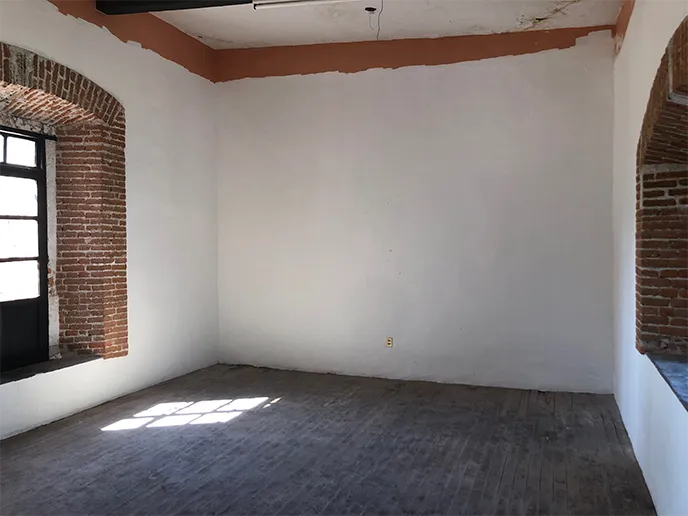
Unfortunately, in 1984, the high school was unable to continue under the education laws of the time, and the resident missionary closed the school, focusing his attention on Bible courses and evangelical work. The campus occupied two buildings, one of which served as the administration office, music room, and the principal's residence, while the other contained the dormitories, dining hall, classrooms, science lab, and library.
From the 1990s to the mid-2000s, it was occupied sporadically during Holy Week and summer by groups of young evangelicals from North Carolina and Texas, to support Mr. Halliday's vision. They carried out non-profit community work, offering medical and dental care and support to the Rio Verde Evangelical Church until they completed their vision in 2014 and the community that supported Mr. Halladay sold all the properties they owned.
The renaissance of
the Hacienda
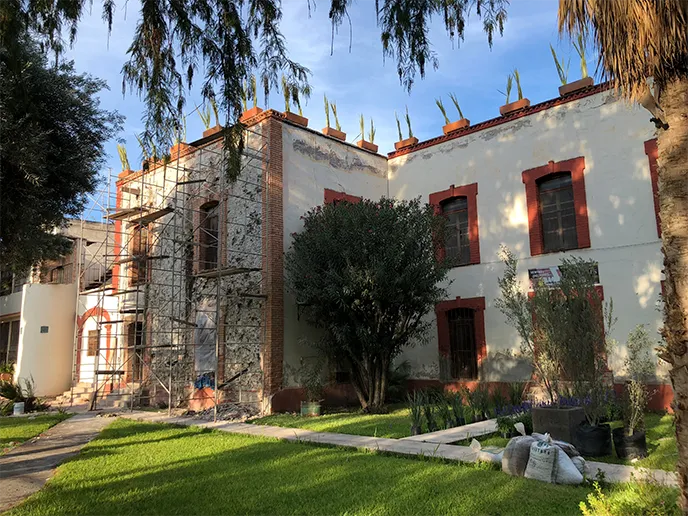
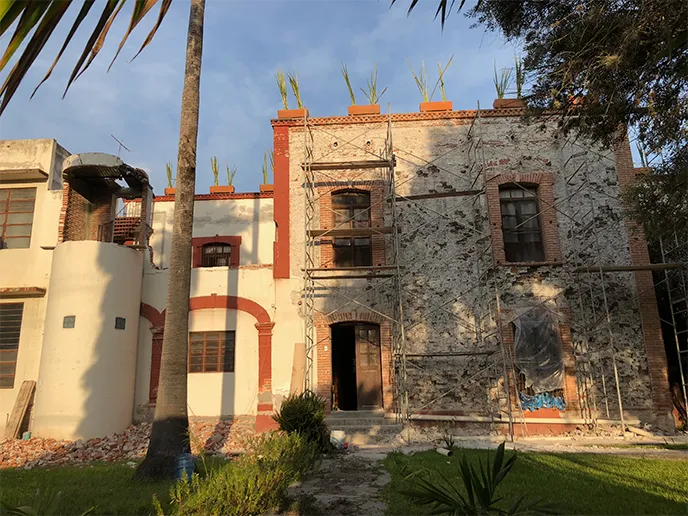
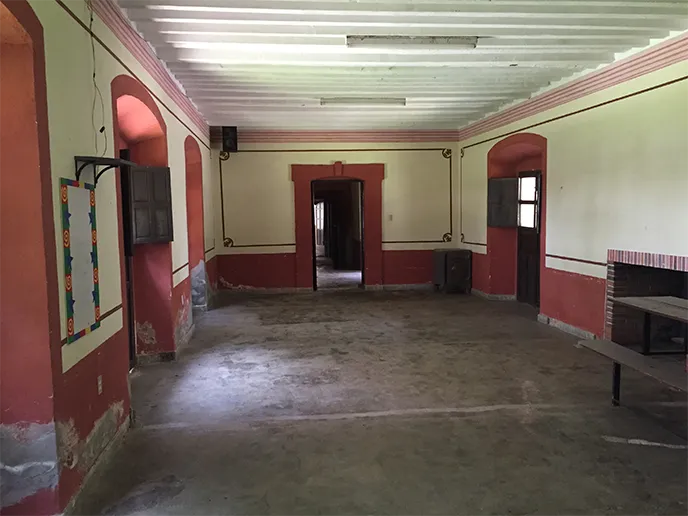
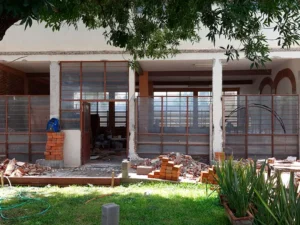
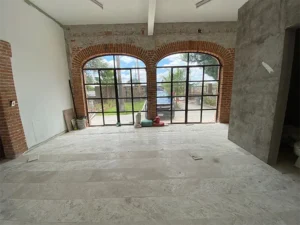
This leads to his third intervention, where, due to a lack of ongoing maintenance, the property falls into ruin, and a plan is made to restore everything that was neglected, from dampness in slabs, walls, collapsed drains, and endless details, for which it was necessary to have a special license because it is a historical heritage site, which should respect its entire structure, but at the same time have basic services updated without damaging the heritage.
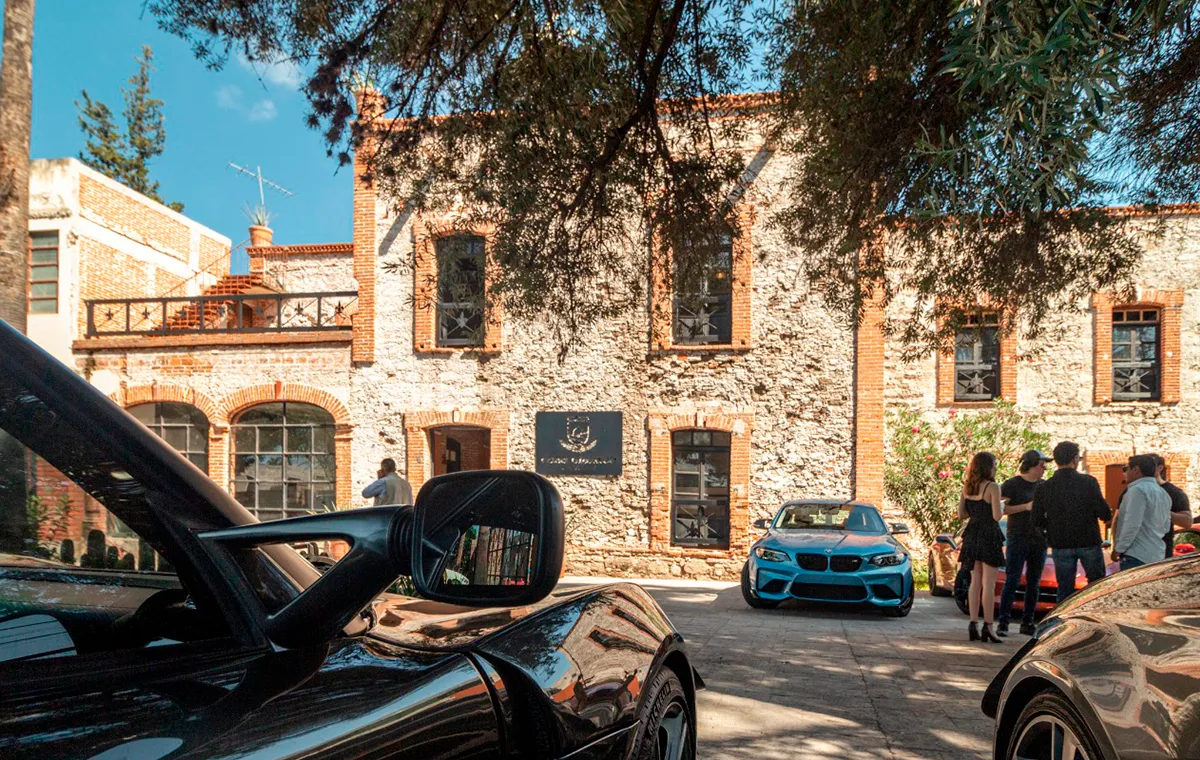
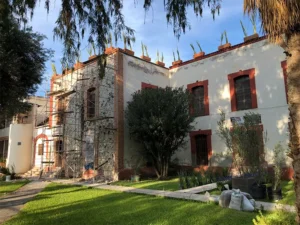
Its restoration began in 2010, when its perimeter was limited with ashlar blocks, respecting the sabino (ahuehuete) trees (old man of the water), which have been considered a national tree since 1921. This tree represents Mexican culture, and the largest specimen is found in Oaxaca, where it is considered sacred by several indigenous peoples. These trees are located on Zaragoza Street, and the perimeter fence was built to respect the area around each of these trees.
Integrating luxury
Without Erasing History
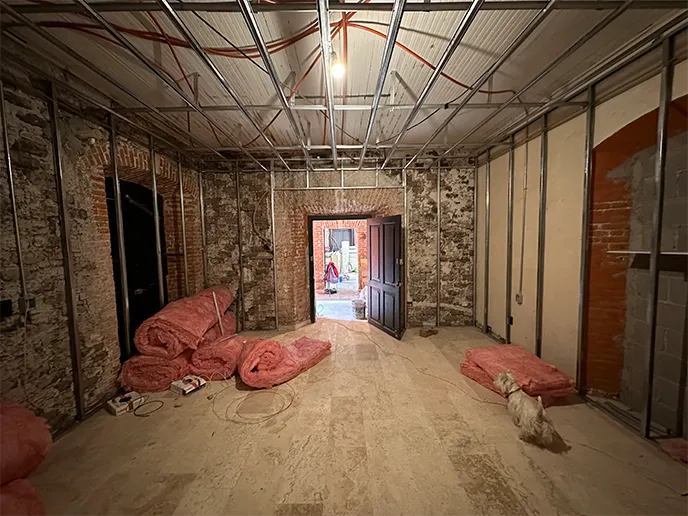
Clearly, the estate was not designed to accommodate guests from all over the world, so it was a challenge to install new sanitary, hydraulic, and electrical facilities without damaging the adobe walls and slabs. Great care had to be taken when making grooves or, failing that, creating drywall walls, as we did not want to add more weight to the original structure.
Not only were the facilities a challenge, but the very use of space to separate the rooms meant that new access connections had to be created, such as the bridge on the rear façade and, in some cases, new dividing walls, in order to create well-established access to each room.
An architectural work
of the Highest Standard
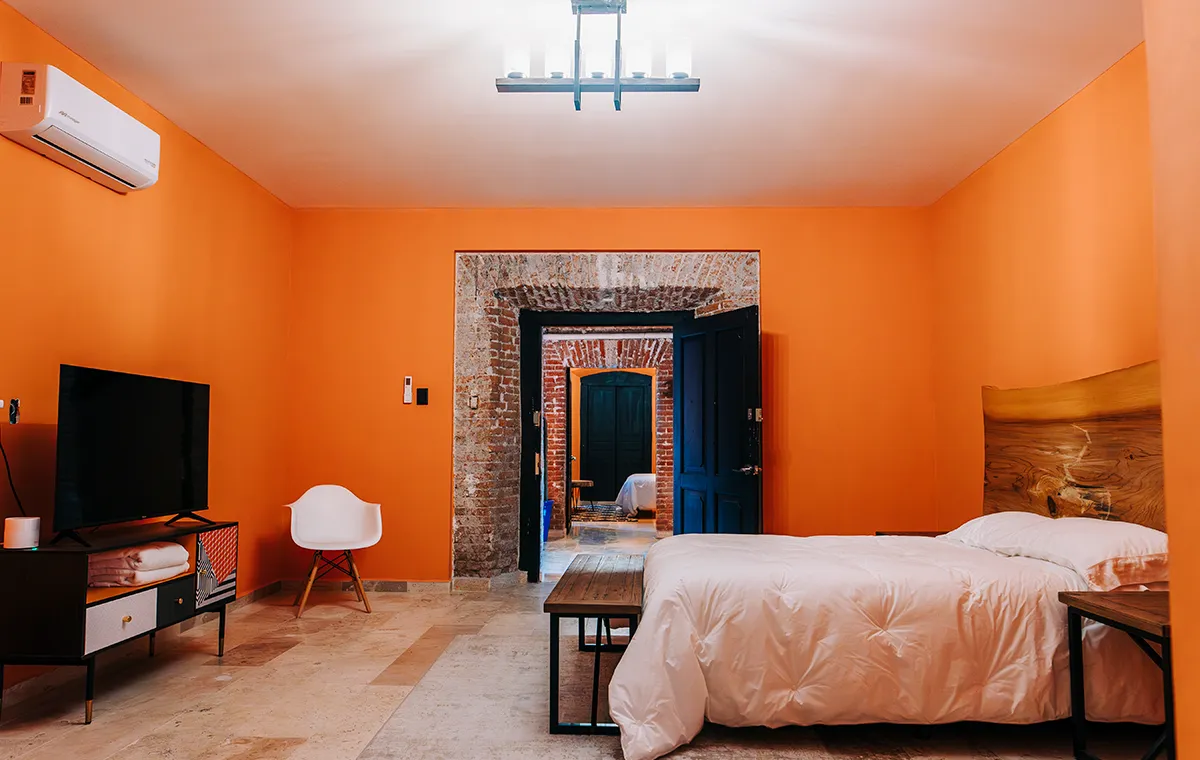
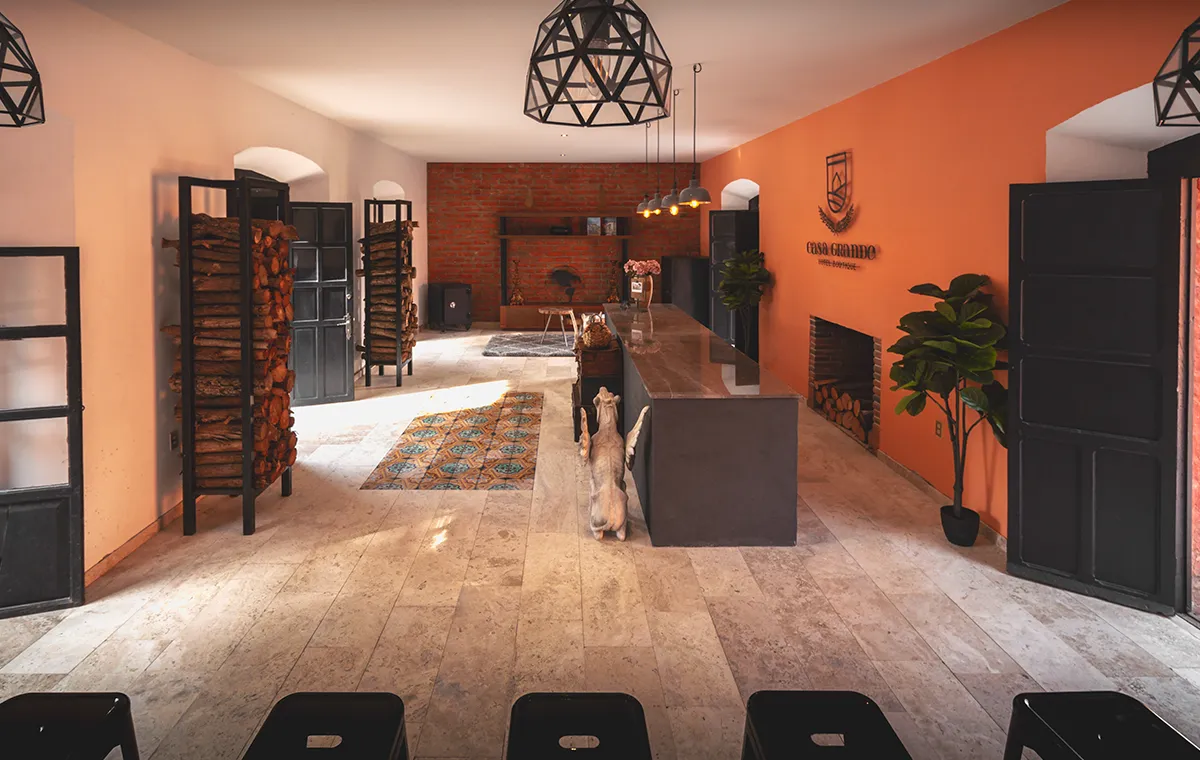
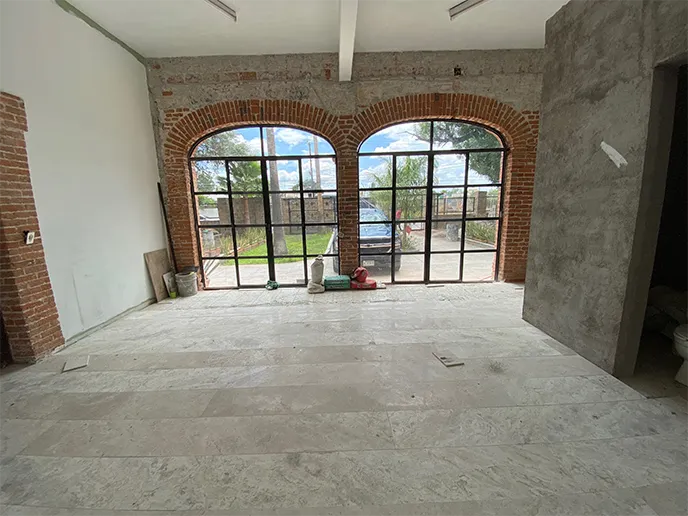
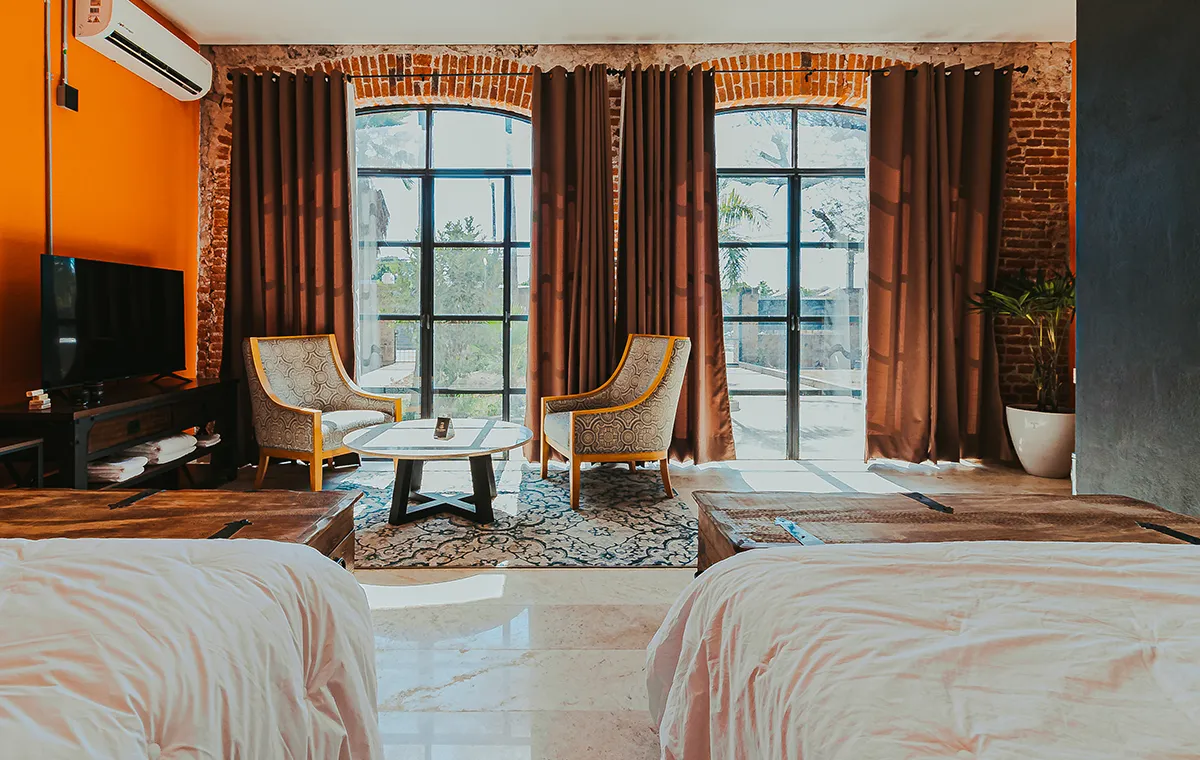
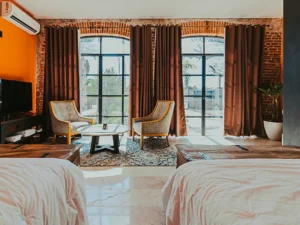
The restoration was carried out by Empresa Grupo Desarrollador Arquitectos Ejecutivos de México S.A de C.V, which specializes in high-end residences nationwide. In a sense, it sought to give the property a residential finish by incorporating tempered glass in the bathrooms, travertine marble floors and walls, among other details, with the aim of enhancing its original architecture with a touch of rustic luxury.
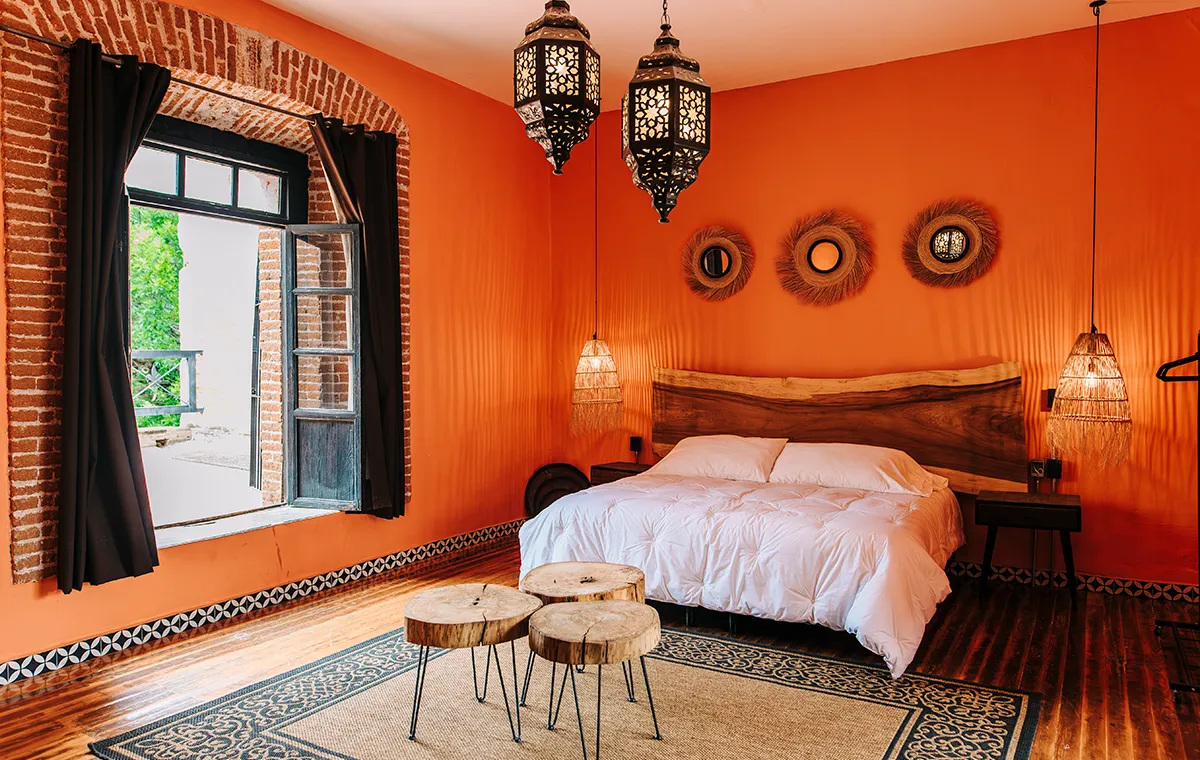
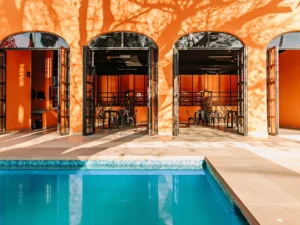
The aim is to highlight Mexican rural culture, with the color orange referring to the fruit for which the Rio Verde region is known. There was a time when this area was famous for its large production of this fruit, until oranges began to be imported from other countries, causing production in the region to decline. However, the memory of its people remains, and this property reflects the identity of the region.
Book your stay
What our customers say
 Casa Grande Rio
 30 reseñas GooglePublicado en Google
 Noemi CavazosPerfecto para un escape de la rutina en la hermosa Huasteca Potosina.Publicado en Google
 Clau Ramirez Diaz de SandiMuy bonito y familiar! el servicio muy bueno y el personal muy atento. Todo súper limpio y hermosa la decoración. Gracias por una estancia tan bonita!Publicado en Google
 Samantha FavelaMi habitación súper bella! Fue la no.7 tiene detallitos de pajaritos que me fascinaron, una vista muy linda y un colchón muy cómodo. El servicio de Lucero fue de lo mejor del hotel, pues a pesar de estar súper lindo el lugar, un buen servicio acabó siendo la cereza del pastel. Y de la ubicación, perfectamente céntrico, justo en frente un Oxxo, a un lado unas muchas deliciosas , al otro unas hamburguesas al carbón riquísimas, nombre todo a un lado, y mi experiencia conociendo las grutas de catedral a 40 min del hotel de lujo. GRACIAS CASA GRANDE!Publicado en Google
 Adriana LobatoMuy bonito el hotel, las habitaciones bellísimas y súper cómodas y Lucero una atención increíble, muy atenta y amable, llegamos caminando al centro y cerca encuentras de todo, 100% recomendable.Publicado en Google
 Lilian M. Santacreu - Life Coach -El lugar está increíble, es una antigua hacienda ideal para descansar y disfrutar de la piscina y sus jardínes, las habitaciones son una maravilla, hacia mucho que no dormía toda la noche y estos dos días se me hicieron cortos. Nos recibió Lucero, una mujer super simpática, amable y educada, que realmente nos hizo sentir como en casa. Nos enseñó todo el lugar sin prisa por lo que pudimos disfrutar de cada detalle del lugar que está decorado de forma exquisita. Lo recomiendo al 100%, no te vas a arrepentir, de ahora en adelante es nuestro lugar favorito en Rio Verde. Mil gracias por hacernos el viaje placentero. ¡Volveremos muy pronto!Publicado en Google
 Jaime ParraFue una excelente estadía, el estilo la habitación nos encantó y todo el lugar es hermoso.


